


Earlier today, we received the final PMI data for Australia for March. The report sent a clear signal of deteriorating economic conditions. The reading fell back into contraction territory (<50) at 49.8 (from 51.0 in February). This marks the first decline in five months. The details of the report confirm a weak picture: new orders fell for the first time in several months, output declined again, and employment also moved into negative territory, indicating a broad slowdown in activity. At the same time, the key driver of the slowdown is not only domestic demand but also cost pressure and the energy crisis. Input prices rose to the highest levels in several years due to higher oil prices and transport costs. This creates a stagflationary environment for Australia — slowing growth alongside rising inflation — largely driven by disruptions in the global energy supply chain.
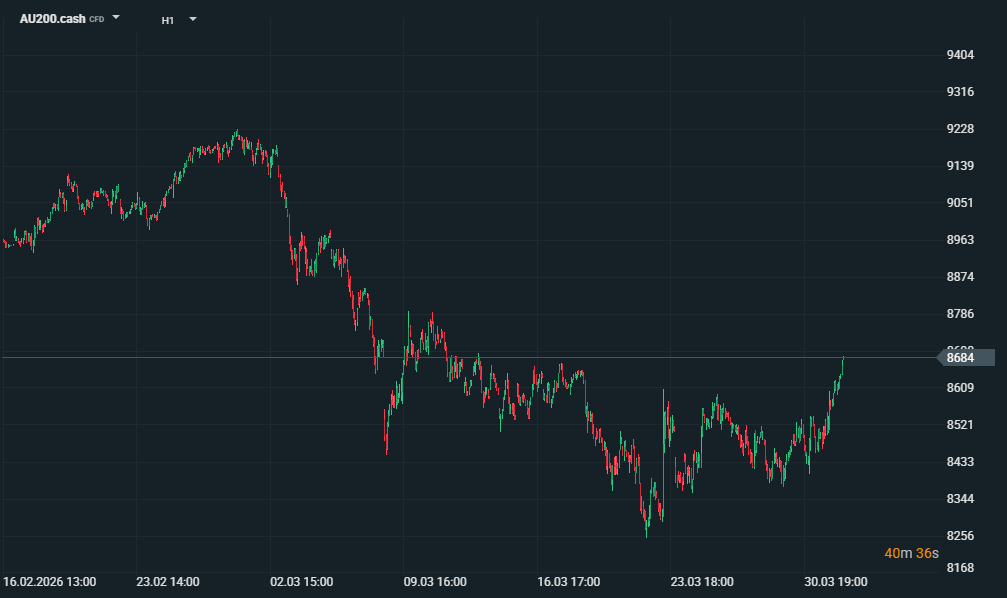
Despite the weak macro signal, the equity market reacted in the opposite direction. The AU200 (S&P/ASX 200) rose by around +2.2% to 8,680 points, supported by a global risk-on move and hopes for de-escalation of the conflict in the Middle East. The rally was mainly driven by the mining sector and cyclical stocks, reflecting Australia’s strong exposure to commodities and global demand. However, this rebound followed a very weak March, when the index fell nearly 10%. Australian equities are particularly sensitive to geopolitical shocks, oil price volatility, and expectations for global growth, making them a useful barometer of the Middle East conflict.

Daily Summary: A Lull in the Pre-Holiday Calm

Market wrap 📌US indices in focus amid strong NFP data and $100 oil

BREAKING: NFP payrolls skyrocket 🚀 EURUSD back in red 📉

EURUSD catches breath before NFP 📈
